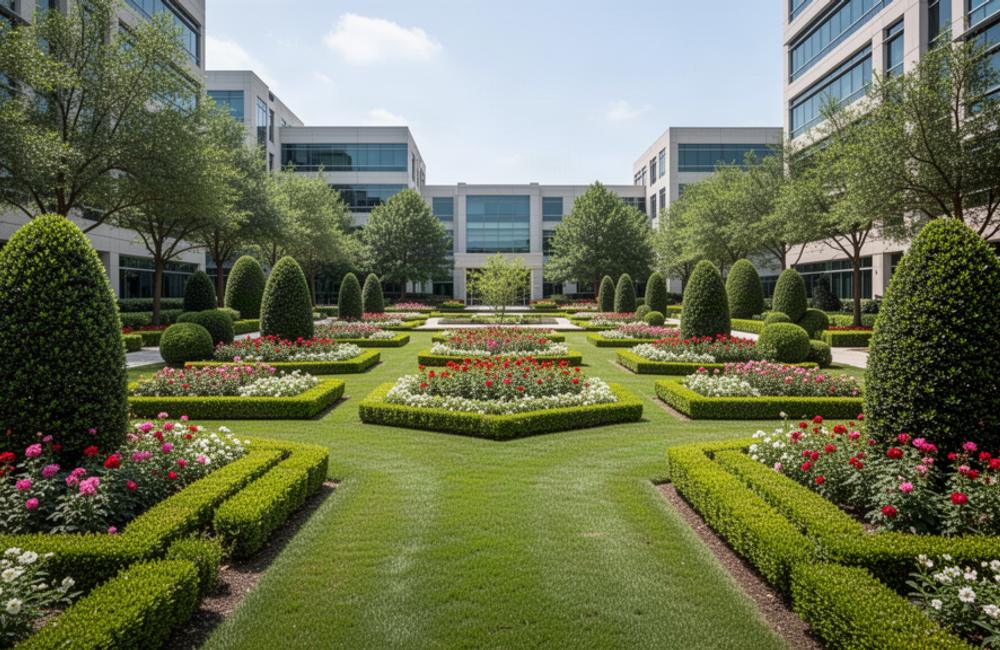

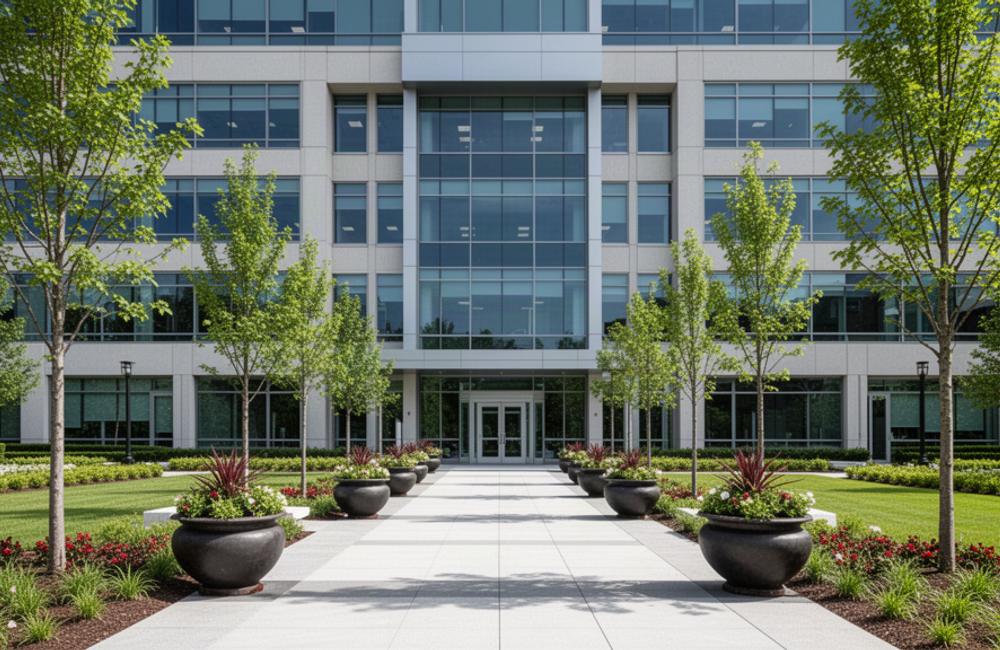
"Sustainable landscaping" gets treated as a separate, pricier tier from regular landscaping, when in practice most of what makes a landscape sustainable also makes it cheaper to run long-term. It's less a checklist you bolt on and more a set of defaults you design around from the start.
Water is the obvious place to start. Drip irrigation scheduled to a site's actual plant palette and season — rather than a blanket watering routine — cuts water use significantly and reduces the root stress that comes from overwatering. Climate-appropriate planting compounds this: species suited to a site's local conditions simply need less water, fewer chemical inputs, and less replacement over time than plants fighting their environment.
Pest management is the other big lever. Neem and Pongamia-based organic treatments handle most common pest issues without the runoff and soil impact of blanket chemical spraying, and they're compatible with the kind of Integrated Pest Management approach that catches problems at an early stage rather than after visible damage.
Soil health matters more than it gets credit for. Compost-based soil enrichment improves water retention and reduces fertiliser dependency over time, which means less input cost every season rather than a one-time gain. Sustainable planter materials round this out for potted and container planting, particularly in greenwall and courtyard installations.
None of this requires accepting a worse-looking landscape — the sites we maintain this way hold their appearance as well as anything on a conventional maintenance plan, usually with fewer emergency corrections. If your organisation has sustainability or green building targets tied to your grounds, this is worth building into the brief from day one rather than retrofitting later.