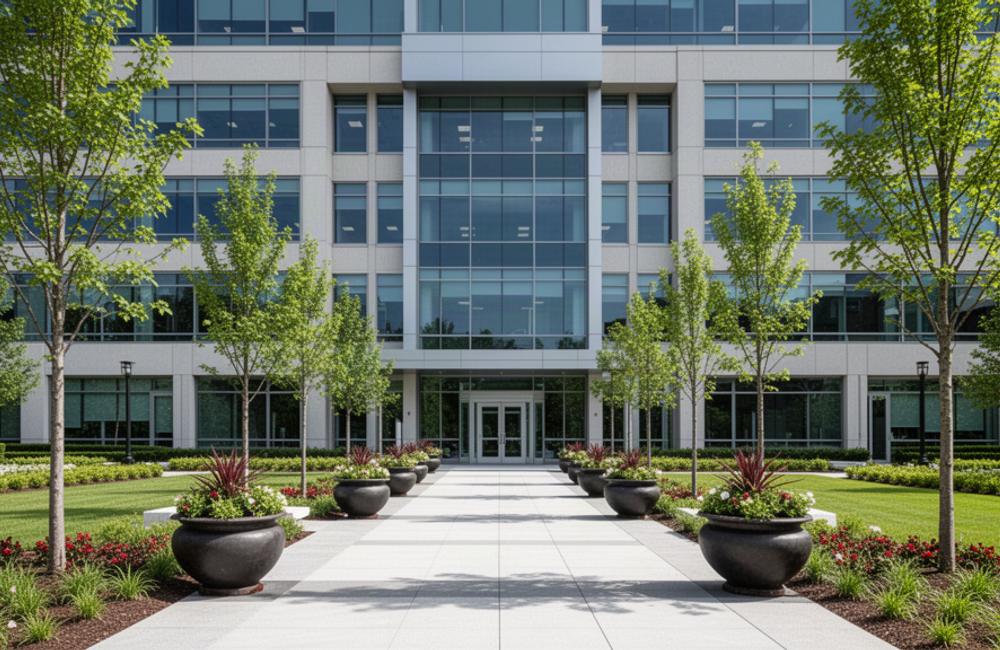

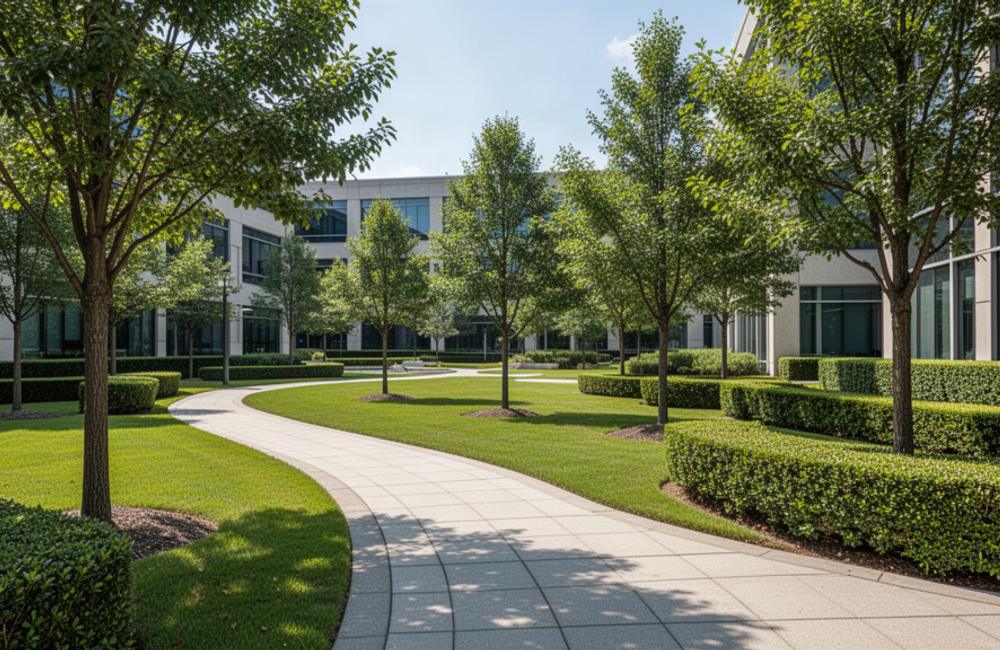
A campus landscape design has to answer to more constituencies than a garden does — employees walking between buildings, an events team that occasionally needs open lawn for a launch, a facilities team that has to maintain it for the next decade, and often a compliance requirement around green cover or stormwater management. Designing for looks alone misses most of that.
It starts the same way every project does: a site survey of soil, drainage, existing shade and how people actually move through the space, before any planting plan gets drawn. On a campus, this also means walking the site at different times of day to understand foot traffic patterns and which corners get ignored versus which get treated as informal meeting spots — those should inform where seating, shade and feature planting go.
Plant palette decisions on a campus need to account for maintenance capacity as much as aesthetics. A design with twelve different specimen species looks striking in a concept render but is expensive and complex to maintain consistently across a large site; a tighter palette of proven, climate-appropriate plants, used well, usually reads better in person and costs less to keep looking good.
Phasing matters more on a campus than almost anywhere else, particularly if the site is still under construction or partially occupied. Sequencing planting around civil and electrical work, and being explicit about which areas open in which phase, avoids the common problem of finished landscaping getting damaged by ongoing construction traffic.
The design and the maintenance plan should come from the same conversation, not be handled separately — a landscape that's beautiful on handover day but wasn't designed with its own upkeep in mind tends to degrade within the first year. If you're scoping a new campus landscape, it's worth bringing your facilities team into the design conversation early rather than after the concept is locked.